

- High-Point-m
Comparing Whole Home Renovations and Room-by-Room Upgrades for Better Remodeling Decisions
Planning a home renovation often starts with an important question: should everything be remodeled at once, or is it better to update one room at a time? Both approaches can improve comfort, functionality, and property value, but they involve different timelines, budgets, and levels of disruption.
A whole home renovation typically updates multiple areas of the house during one project. This approach creates a more unified design and allows major changes to be completed within a single construction period.
Room-by-room upgrades, on the other hand, focus on improving individual spaces over time, allowing homeowners to spread costs across multiple projects.
Neither option is automatically better. The right choice usually depends on the home’s condition, available budget, long-term plans, and how much disruption the household is prepared to manage. Understanding the differences can help homeowners choose the remodeling strategy that makes the most sense for their needs.
What Are the Main Differences Between Whole Home Renovations and Room-by-Room Upgrades?
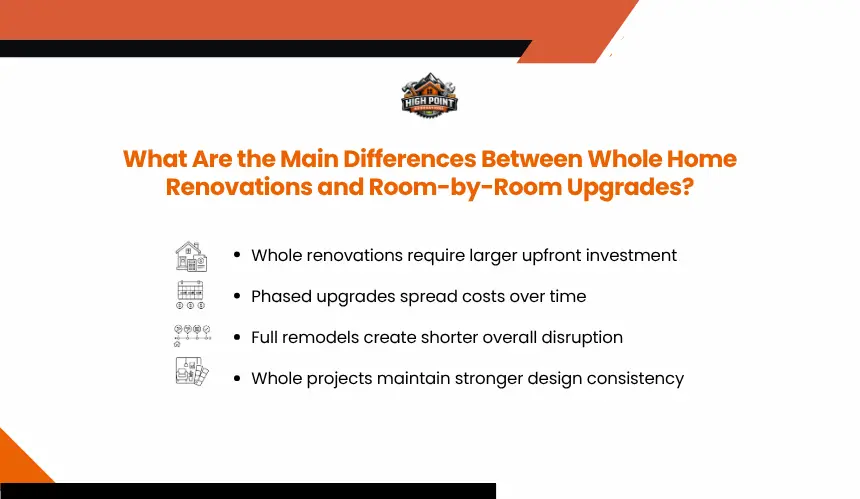
Both remodeling approaches can improve a home, but they differ in cost, scheduling, design planning, and the overall experience during construction. Understanding these differences can help homeowners determine which option better aligns with their goals.
How budget and project costs are managed
A whole home renovation typically requires a larger upfront investment because multiple areas are being remodeled at the same time. However, completing everything together may simplify planning and reduce the need for repeated construction phases.
Room-by-room upgrades allow homeowners to spread expenses over time. This approach can make budgeting more flexible, especially when improvements are completed gradually over several months or years.
How timelines and household disruption compare
A full-home renovation usually involves a more intensive construction period, but once the work is complete, the majority of the disruption is over.
With room-by-room remodeling, each project may be smaller, but construction activities can return multiple times. Some homeowners prefer shorter individual projects, while others prefer completing everything at once.
How design consistency can be affected
Because all selections are made together during a whole home renovation, materials, colors, and finishes often create a more unified appearance throughout the house.
With phased remodeling, design preferences may change over time. This can sometimes create differences between older and newer spaces, depending on when each project is completed.
How long-term planning differs between both approaches
Whole home renovations are often planned with the entire property in mind, making it easier to coordinate layouts, materials, and future needs.
Room-by-room upgrades offer more flexibility because homeowners can adjust priorities as their needs, budget, or lifestyle change over time.
When a Whole Home Renovation Makes More Sense
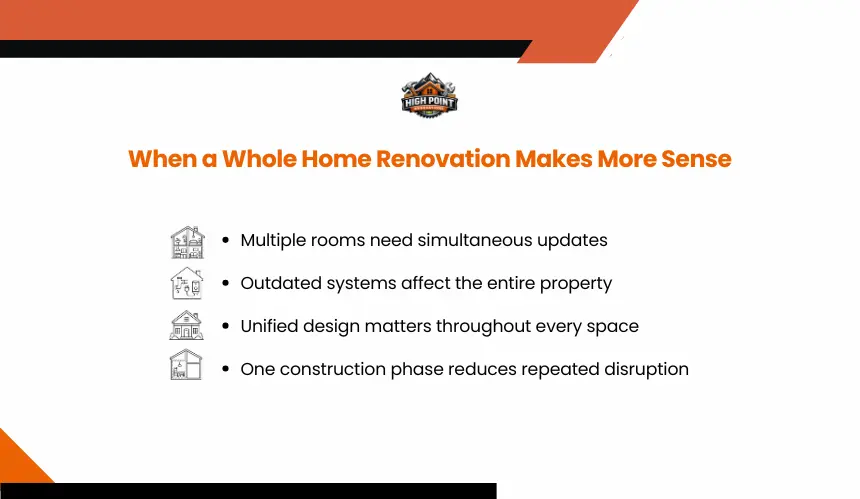
A whole home renovation is often the better choice when multiple areas of the house need attention at the same time. Rather than managing separate projects over several years, some homeowners prefer to complete the majority of the improvements during one remodeling phase.
Although this approach usually requires more planning and a larger initial investment, it can provide long-term benefits in certain situations.
Situations where a full-home remodel may be beneficial
A whole home renovation may make more sense when:
- Several rooms need updating at the same time.
- The home has outdated layouts, finishes, or systems throughout the property.
- Homeowners want a consistent design style from room to room.
- Major plumbing, electrical, or structural upgrades are already being planned.
- The goal is to complete the renovation once rather than dealing with repeated construction projects.
Many homeowners also choose a whole home renovation after purchasing an older property or before moving into a newly acquired house. Completing the work before fully settling in can make the process more convenient and reduce interruptions later.
When Room-by-Room Upgrades Are the Better Choice
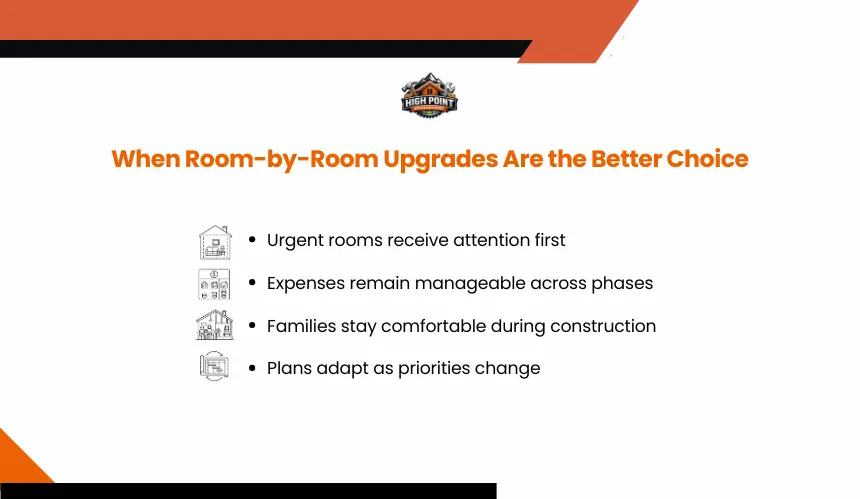
Room-by-room remodeling can be a practical option for homeowners who prefer a gradual approach. Instead of renovating the entire house at once, improvements are completed in phases based on priorities, budget, and timing.
For many families, this approach provides greater flexibility and allows projects to be scheduled when they are most convenient.
Reasons some homeowners prefer phased remodeling
Room-by-room upgrades may be the better choice when:
- Only certain areas of the home need immediate attention.
- The remodeling budget is being spread over time.
- Homeowners want to continue living comfortably in the house during construction.
- Future design preferences are still evolving.
- Projects are being prioritized based on functionality rather than appearance.
This approach is also common for homeowners who want to update kitchens, bathrooms, or other heavily used spaces first before moving on to less urgent areas. By completing projects gradually, it becomes easier to adjust plans and priorities as needs change over time.
Important Questions to Ask Before Choosing a Remodeling Approach
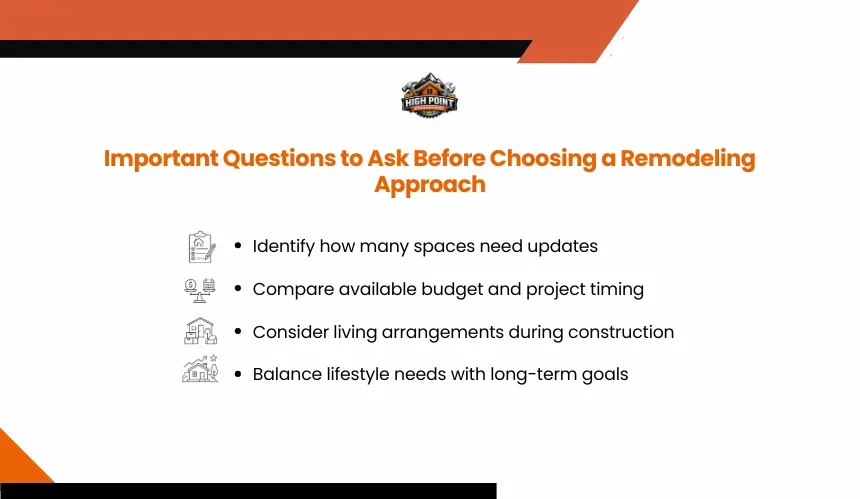
Before deciding between a whole home renovation and room-by-room upgrades, it helps to evaluate how the project fits your current needs and plans. Asking the right questions early can help homeowners avoid unnecessary expenses and choose a remodeling strategy that supports their lifestyle.
Questions that can help guide the decision
Homeowners may find it helpful to consider questions such as:
- How many areas of the home actually need updating?
- Is there enough budget available for a large project, or would phased remodeling be more comfortable?
- Will the family remain in the home during construction?
- Is achieving a consistent design throughout the house important?
- Are there major plumbing, electrical, or structural improvements that affect multiple rooms?
- How long is the homeowner planning to stay in the property?
- Would completing everything at once be more convenient than scheduling several separate projects?
Taking time to answer these questions can provide a clearer understanding of which remodeling approach makes the most sense. The best choice is often the one that balances budget, lifestyle, and long-term goals rather than simply focusing on the size of the project.
Frequently Asked Questions
Is it cheaper to renovate an entire house at once?
Not always. A whole home renovation requires a larger upfront investment, but it may reduce repeated labor costs and eliminate the need for multiple construction phases. The overall value depends on the scope of the project.
Which rooms should homeowners remodel first?
Many homeowners prioritize kitchens and bathrooms because they are heavily used and often have the greatest impact on daily comfort and functionality.
Can homeowners live in the house during a whole home renovation?
In some cases, yes, but extensive renovations may make certain parts of the home temporarily unusable. Some homeowners choose temporary accommodations depending on the project’s size.
Do room-by-room upgrades take longer overall?
Although each project may be shorter, completing several renovations over time can extend the overall remodeling timeline compared to a single large project.
Is a whole home renovation better for older houses?
Older homes with widespread outdated systems, finishes, or layouts often benefit from a comprehensive renovation because multiple improvements can be addressed together.