
- High-Point-m
Understanding the Bathroom Remodeling Process From Start to Finish
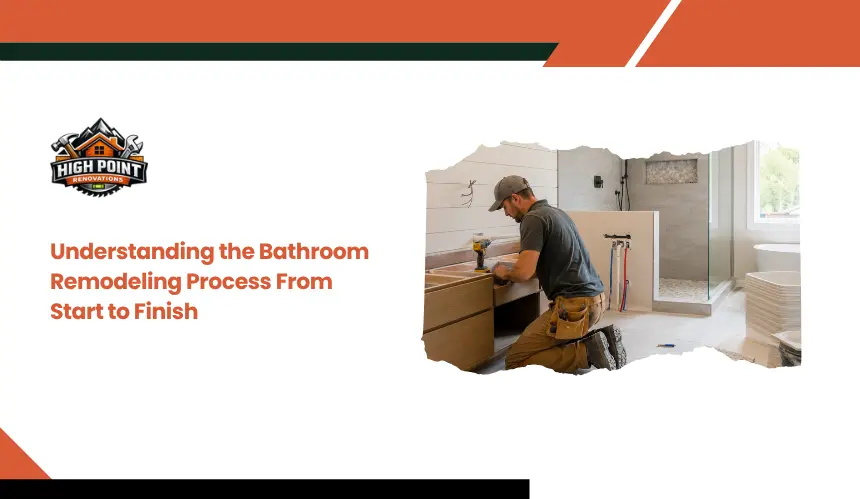
A bathroom remodel is a step-by-step process that turns an existing bathroom into a more functional, updated, and comfortable space. It may involve changing the layout, replacing old fixtures, updating plumbing or electrical systems, installing new tile, and improving storage or ventilation.
For many homeowners, the process can feel confusing because several trades and tasks may be involved. One stage usually depends on the next, so planning, demolition, rough-in work, installation, and final finishing must happen in the right order.
This guide explains what usually happens during a bathroom remodel from start to finish. It covers the main remodeling steps so homeowners can better understand what to expect before, during, and near the end of the project.
1. Planning and Designing the New Bathroom
Every successful bathroom remodel begins with planning. Before any demolition or construction starts, homeowners typically decide what they want to improve and how they want the finished space to look and function. This stage helps establish the direction of the project and allows important decisions to be made before work begins.
Setting goals, budget, and layout preferences
During the planning phase, homeowners often identify the features they want most, such as additional storage, a larger shower, updated fixtures, or improved accessibility. Establishing a budget early also helps prioritize materials and design choices.
Layout considerations are equally important. Some remodels keep the existing layout, while others relocate plumbing fixtures to create a completely different arrangement. Selecting materials, colors, tile styles, vanities, lighting, and hardware usually happens during this stage as well.
Spending time on planning can help reduce delays later in the project and create a clearer vision for the finished bathroom.
2. Demolition and Removal of Existing Materials
Once the design and material selections are complete, the remodeling process usually moves into demolition. This stage prepares the space for new construction by removing outdated materials and exposing the areas that need to be updated.
Although demolition can look dramatic, it is an important step that allows contractors to inspect the existing structure and prepare the bathroom for the next phase of work.
What is removed before construction begins
Depending on the scope of the remodel, crews may remove old flooring, wall tile, vanities, toilets, tubs, showers, lighting fixtures, and other outdated components. In larger projects, sections of drywall may also be removed to access plumbing and electrical systems behind the walls.
Demolition can sometimes reveal hidden issues such as water damage, mold, or deteriorated materials that were not visible before construction began. Addressing these problems early helps create a stronger foundation for the new bathroom and can prevent future complications.
3. Plumbing, Electrical, and Structural Work
After demolition is complete, attention shifts to the systems hidden behind the walls. This phase is often referred to as rough-in work and is one of the most important parts of the remodeling process.
Although these updates are not always visible in the finished bathroom, they help ensure the space functions safely and efficiently for years to come.
How behind-the-wall systems are updated
Plumbing lines may be relocated if sinks, showers, or toilets are being moved to a new position. Electrical work may include installing new outlets, lighting, switches, exhaust fans, or upgraded wiring to support modern fixtures.
In some remodels, structural adjustments may also be necessary. Contractors may reinforce framing, repair water damage, or make modifications to accommodate new layouts and features.
Completing these updates before finishes are installed helps create a reliable foundation for the remainder of the project and ensures that everything behind the walls is prepared for long-term use.
4. Installation of New Bathroom Features and Finishes
Once the plumbing and electrical work is complete, the bathroom begins to take its final shape. This stage is often the most exciting for homeowners because the design choices made during planning start becoming visible.
New materials and fixtures are installed in a specific order to help ensure proper fit, function, and appearance.
From flooring and tile to vanities and fixtures
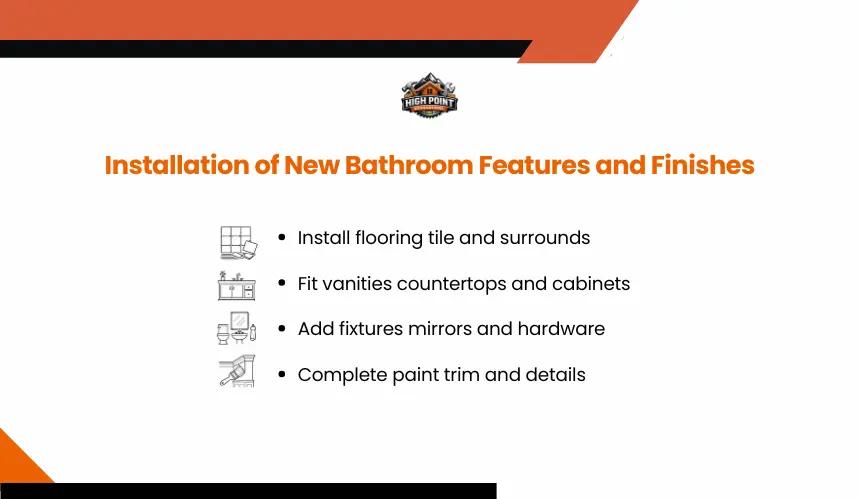
Depending on the project, contractors may install flooring, wall tile, shower surrounds, cabinets, countertops, and backsplashes before adding the finishing fixtures. Sinks, faucets, toilets, lighting, mirrors, and hardware are typically installed toward the end of this phase.
Paint, trim, and decorative details may also be completed as the project progresses. As each element is added, the bathroom gradually transforms from a construction site into a finished living space.
Because multiple components must work together, careful installation helps ensure the bathroom not only looks good but also performs properly for everyday use.
5. Final Touches and Project Completion
The final stage of a bathroom remodel focuses on inspections, adjustments, and preparing the space for everyday use. By this point, the major construction work has been completed, and the project begins transitioning into its finished form.
These last steps help ensure everything functions properly and that the bathroom is ready for long-term use.
Inspections, cleanup, and preparing the bathroom for use
Contractors typically perform final checks to confirm that fixtures, plumbing connections, lighting, and other installed features are working correctly. Any minor adjustments or touch-ups are usually completed during this stage.
The work area is then cleaned, construction debris is removed, and the bathroom is prepared for normal use. Homeowners may also receive care instructions for materials, fixtures, or surfaces that require specific maintenance.
Once these final details are complete, the remodeled bathroom is ready to be enjoyed. The result is a space that not only looks updated but also supports improved comfort, functionality, and everyday convenience.
Frequently Asked Questions
How long does a typical bathroom remodel take?
The timeline varies depending on the size and complexity of the project. Smaller remodels may take a few weeks, while larger renovations can take longer if structural changes or custom materials are involved.
Can homeowners use the bathroom during the remodel?
In most cases, the bathroom being renovated cannot be used during certain phases of the project. Many homeowners plan to use another bathroom in the home while work is underway.
Do bathroom remodels require permits?
Some remodeling projects require permits, especially when plumbing, electrical, or structural changes are involved. Requirements vary depending on local regulations and the scope of work.
What problems are commonly discovered during demolition?
Contractors sometimes uncover water damage, mold, outdated wiring, plumbing issues, or structural deterioration after old materials are removed.
Is it possible to remodel a bathroom without changing the layout?
Yes. Many bathroom remodels keep the existing layout while updating fixtures, flooring, vanities, and finishes. Keeping plumbing in the same location can sometimes simplify the project.