
- High-Point-m
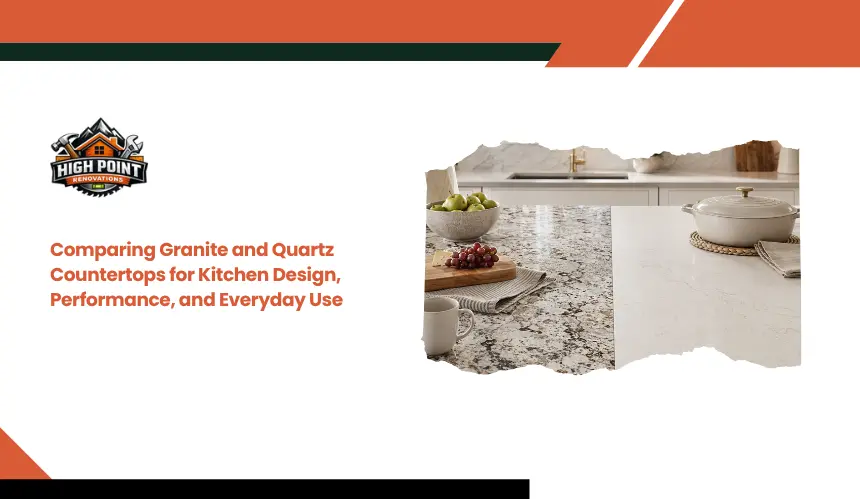
Comparing Granite and Quartz Countertops for Kitchen Design, Performance, and Everyday Use
Granite and quartz are two of the most popular countertop materials for modern kitchens, but they are not the same in appearance, maintenance, durability, or overall feel. Granite is a natural stone with unique patterns, while quartz is an engineered surface designed for consistency and easier upkeep.
Choosing between them usually depends on how the kitchen is used every day. Some homeowners prefer the natural character and heat resistance of granite, while others prefer the low-maintenance surface and design control that quartz provides.
This guide compares granite and quartz countertops so homeowners can understand how each material performs, what makes them different, and which option may fit their kitchen style, cooking habits, and maintenance preferences best.
What Are Granite Countertops?
Granite countertops are made from natural stone that is cut, shaped, polished, and installed as a kitchen surface. Each slab comes from the earth, so the color, veining, and pattern can vary from one piece to another.
This natural variation is one of the main reasons homeowners choose granite. It gives the kitchen a unique look that does not feel manufactured or repeated.
How granite countertops are made
Granite is quarried in large stone blocks, then cut into slabs for countertop use. After cutting, the slab is polished and fabricated to fit the kitchen layout, including sink openings, edges, and seams.
Because granite is natural stone, every slab has its own movement, mineral pattern, and color depth. This makes it a good choice for homeowners who want a countertop with natural character.
The appearance and characteristics of granite
Granite often has visible veining, speckles, and color variation throughout the slab. Some slabs look subtle and uniform, while others have dramatic movement and bold natural patterns.
It is also known for strength and heat resistance, although sealing is usually recommended to help protect the surface from staining. Granite fits homeowners who like natural beauty and do not mind some routine maintenance.
What Are Quartz Countertops?
Quartz countertops are engineered surfaces made from natural quartz minerals combined with resins and pigments. Unlike granite, which is cut directly from stone slabs, quartz is manufactured to create a more controlled and consistent appearance.
Because of this process, quartz has become a popular option for homeowners who want durability with less ongoing maintenance.
How quartz countertops are manufactured
Quartz countertops are produced by combining crushed quartz with binding materials and color pigments. The mixture is then compressed and formed into slabs that are fabricated to fit the kitchen layout.
This manufacturing process allows for greater consistency in color and pattern. It also gives homeowners access to a wide range of styles, including designs that resemble natural stone.
The appearance and characteristics of quartz
Quartz countertops generally have a more uniform appearance than granite. Some designs feature subtle movement, while others imitate the look of marble or natural stone with carefully controlled veining.
Because quartz is non-porous, it does not typically require sealing. Many homeowners appreciate its smooth surface, stain resistance, and ease of maintenance, making it a practical choice for busy kitchens.
What Are the Main Differences Between Granite and Quartz?
Although granite and quartz are both durable countertop materials, they differ in appearance, maintenance requirements, and overall performance. Understanding these differences can make it easier to choose the material that best matches your kitchen and lifestyle.
How maintenance and durability compare
Granite is known for its strength and durability, but it generally requires periodic sealing to help protect the surface from stains and moisture absorption.
Quartz is non-porous and does not usually require sealing. Its low-maintenance surface makes daily cleaning simple, which is one reason many homeowners choose quartz for busy kitchens.
How heat and stain resistance vary
Granite performs very well under heat and can tolerate hot cookware better than many countertop materials. However, because it is porous, spills should be cleaned promptly to help prevent staining.
Quartz offers excellent stain resistance because of its non-porous surface, but excessive direct heat may damage the resins used during manufacturing. Using trivets and hot pads is generally recommended.
How cost and long-term value compare
Both materials are considered premium countertop options, and pricing can vary depending on the slab, design complexity, and installation requirements.
Many homeowners focus less on which material is cheaper and more on which one better suits their cooking habits, maintenance preferences, and overall kitchen design goals.
Which countertop gives more design control?
Quartz gives more design control because its patterns and colors are created during manufacturing. This allows homeowners to choose from a wide range of styles, including modern solid colors, subtle textures, and designs that resemble marble or natural stone.
Granite offers a more natural and one-of-a-kind appearance, but every slab is different. Variations in veining, color, and mineral patterns are part of its appeal, yet they can also make it more difficult to achieve a perfectly uniform look.
Who Should Choose Granite and Who Should Choose Quartz?
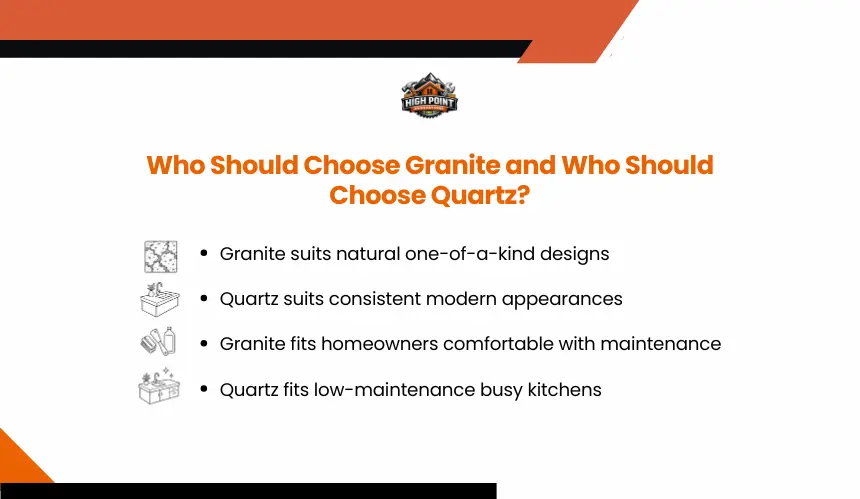
There is no universal winner between granite and quartz. The better option depends on how the kitchen is used, the amount of maintenance the homeowner is comfortable with, and the overall design style they want to achieve. Understanding daily habits and long-term expectations can make the decision much easier.
When granite may be the better fit
Granite may be a good choice for homeowners who:
- Appreciate the look of natural stone.
- Want each countertop slab to have unique patterns and character.
- Frequently place hot cookware on the countertop.
- Do not mind occasional sealing and routine maintenance.
- Prefer organic variation rather than a perfectly consistent appearance.
When quartz may be the better fit
Quartz may be the right option for homeowners who:
- Prefer a low-maintenance countertop surface.
- Want more consistency in color and pattern.
- Need strong stain resistance for busy kitchens.
- Like modern or contemporary kitchen designs.
- Want a surface that is easy to clean and maintain.
Frequently Asked Questions
Which countertop material adds more resale value to a home?
Both granite and quartz are considered premium materials and can enhance kitchen appeal. The impact on resale value often depends more on the overall kitchen design and local market preferences than the specific material itself.
Can granite and quartz countertops be repaired if they are damaged?
Minor chips and surface damage can often be repaired on both materials. The repair method depends on the extent of the damage and the type of countertop involved.
Which countertop material is better for busy families?
Many homeowners with active households prefer quartz because of its easy maintenance and stain resistance. However, granite can also perform very well when properly maintained.
Do granite and quartz countertops increase home value?
Updated kitchens are often attractive to potential buyers, and both countertop materials are commonly viewed as desirable upgrades. Their value usually comes from durability, appearance, and long-term performance.
Can granite and quartz be used in bathrooms as well?
Yes. Both materials are frequently used for bathroom vanities, laundry rooms, and other interior surfaces because of their durability and design versatility.